Showing posts with label Encyclopaedia Scriptura. Show all posts

Monday, 24 April 2017

John Calvin the Postmillenialist?

The following comes from John Calvin's Catechism of Geneva. Note especially the 3rd question... 

-------

Q268 M. What understand you by the kingdom of God in the second petition?
S. It consists chiefly of two branches — that he would govern the elect by his Spirit — that he would prostrate and destroy the reprobate who refuse to give themselves up to his service, thus making it manifest that nothing is able to resist his might.

Q269 M. In what sense do you pray that this kingdom may come?
S. That the Lord would daily increase the numbers of the faithful — that he would ever and anon load them with new gifts of his Spirit, until he fill them completely: moreover, that he would render his truth more clear and conspicuous by dispelling the darkness of Satan, that he would abolish all iniquity, by advancing his own righteousness.

Q270 M. Are not all these things done every day?
S. They are done so far that the kingdom of God may be said to be commenced. We pray, therefore, that it may constantly increase and be carried forward, until it attain its greatest height, which we only hope to take place on the last day on which God alone, after reducing all creatures to order, will be exalted and pre-eminent, and so be all in all. (1 Corinthians 15:28.)

-------

So Postmil or not?

Monday, 17 April 2017

This changes everything!

Image result for resurrection changes everything
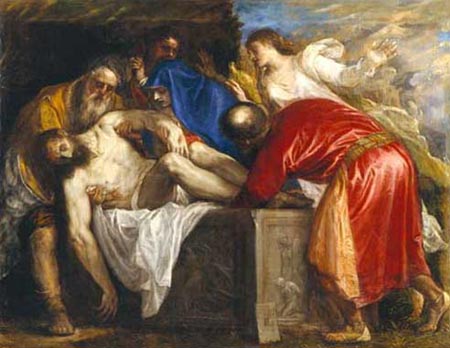
Over 2,000 years ago, Jesus of Nazareth died on a Roman cross outside Jerusalem and was placed in an empty tomb nearby. Three days later, some women came to dress the body and found the tomb empty. They heard from angels that Jesus had risen from the dead, and shortly after encountered Jesus Himself. This Jesus also appeared to His disciples and to many others including to 500 people at the same time. It really happened.

Of course, there have been various alternative explanations since that momentous day when the women discovered the empty tomb. But none of the alternative explanations makes sense. In recent times, ‘experts’ have claimed that the disciples saw visions of Jesus and interpreted them as bodily appearances. They were so hopeful that Jesus would rise from the dead that they projected their hopes onto the world. Visions and dreams of the dead were known in the ancient world, and still occur today. But dreams and visions such as this do not give rise to the belief that the person is risen from the dead. Quite the contrary: if we have a vision or dream of a loved one who has died, the vision or dream is confirmation that they are still dead. And in any case, the disciples were as surprised as anyone at the news of Jesus’ resurrection (just read the Gospels!) More to the point, Jesus repeatedly appeared to the disciples, was touched by them, and even ate some grilled fish after His resurrection. No apparition would happily indulge in a breakfast barbecue (see John 21). Jesus’ resurrection really happened.

And if it really happened, since it really happened, then the world is a very different place than we might have thought. If Jesus rose from the grave, since He rose from the dead, then Jesus is who He always said He was, the Son of God, the King of Kings, the One who is in heaven now, sat by the Father, ruling over every corner of this globe.

Since the resurrection really happened, no situation and no person are hopeless. No marriage is beyond repair, no child beyond recovery, no pagan beyond the reach of the gospel, no sin beyond forgiveness. In Christ, no one and nothing are beyond restoration because, if bodily death is reversible, so are all the other ‘deaths’ that we suffer in life. For the Christian believer, future hope and the certainty of eternal life are not a delusion. As the Apostle Paul puts it “if only for this life we have hope in Christ, we are to be pitied more than all men.” But, continues Paul, “Christ has indeed been raised from the dead”. Amen and Alleluia!

Parish article for the week beginning 16th April - Easter Day 2017 AD (with thanks to PL)

Saturday, 15 April 2017

T'was the night before Easter

Related image
O God, 
Creator of heaven and earth:
Grant that, as the crucified body of your dear Son was laid in the tomb and rested on this holy Sabbath, so we may await with him the  coming of the third day, and rise with him to newness of life; 
who now lives and reigns with you and the Holy Spirit, one God, 
for ever and ever. 
Amen.

Tuesday, 11 April 2017

The way up is to go down

In the ancient world, when a conquering hero rode into town in triumph, it was in a regal chariot or on the back of a stately stallion. Legions of soldiers would accompany him in the victory procession and triumphal arches, festooned with relief sculptures, were often erected to immortalize his valiant victory.
How very different though for Jesus. After driving out demons, healing the sick, and raising the dead, it was time for the King of Kings to enter the Holy City. But to do so, He rode not on the back of a warhorse, but on a donkey. His companions accompanied Him brandishing not swords, but palm branches. The monument to His victory, erected a week later, was not an arch, but a cross.
His earthly beginning was frightfully humble. And His earthly end would be no different. The wood of the manger prefigured the wood of the cross. All of Christ’s life speaks of His love, obedience and humility.
Though He was the Divine Son of God, dwelling with the Father in heavenly glory, He freely plunged to the depths of human misery, joining Himself to our frail nature as He entered our turbulent world. As if that were not enough, He further humbled Himself, accepting the status of a slave. His act of stooping down to wash the feet of His disciples (John 13) was a parable of His whole human existence, for this act was regarded as so undignified that not even Israelite slaves could be compelled to do it.
But that’s just it. Jesus was not compelled to do anything. He willingly lowered himself in His birth, in His ministry, in His death. No one took His life from Him. He freely laid down His own life (John 10:18) – He humbled himself, giving His life as a sacrifice for sin.
It had to be so. Jesus, the New Adam had to undo the damage caused by the first Adam. And what was the sin our first parents? They disobeyed because they wanted to be like God (see Genesis 3). They were tricked by the Serpent, and thereby infected with the deadly venom of pride. The antidote, the anti-venom could only be humility. The foot-washing, donkey-riding and blood-shedding New Adam would crush the head of the deadly serpent by means of loving, humble and sacrificial obedience.

But God responded to His humility by exalting Him far above Caesars, kings, and even Hollywood celebrities. And He invites us to share His glory with Him. But first we must tread His humble path to glory, taking up our cross daily and following Him? Will you come and follow Him?
Parish article for the start of Holy Week, April 2017 AD

Saturday, 14 January 2017

The pastor is no specialist!

Christian theology especially in the late 20th century variety emphasised the comprehensiveness of the Christian faith. The notion that Christianity offers a worldview embracing every area of life was never more explicitly affirmed or more elaborately detailed. Think for example of the idea of Christian pop music, Christian counselling, Christian debt management (such as CAP) and so on. Related to this is the claim that every calling is good and noble, that all work can be devoted to the service of Christ, that all Christians are called to seek first the kingdom of God.

This good and necessary emphasis has often been accompanied, however, by a denigration of the pastoral ministry: All Christians, it is said, have a “full-time” ministry, so the pastor has no higher a calling than any other Christian. But this does not follow. Though all callings can be equally devoted to Christ’s service, not all callings are equal. In Scripture, the pastoral office is specifically tasked with equipping the saints for the work of ministry (Ephesians 4:11-12), with the ongoing teaching of the Word (2 Timothy 4:1-2) and with seeking the well-being of all God’s people (1 Peter 5:1-4).

Another way to put all this is to say that pastoral ministry is the broadest calling, a vocation to minister and to serve (cheerfully) men, women and children in every circumstance.

When sickness strikes, we call the doctor. When in legal trouble, we contact a lawyer. When made redundant, we sign up with an employment agency. When labour pains begin, we call a midwife or a doctor, and when we have breathed our last, the undertaker has his way. For each stage of life, each crises, we have our specialist.

The pastor however is no specialist. They are called to represent Christ and speak for and about Him in every kind of situation. When visiting the ill, when guiding the adulterer in the way of repentance, when seeking to encourage the entrepreneur whose business has folded, when rejoicing with new parents or mourning with those who grieve, the minster is tasked with presenting Christ for the aim of caring for, building up and strengthening God’s Church. Beside the doctor, beside the financial advisor, beside the care home assistant, stands the pastor. In the maternity ward, in the jail cell, in the home tense with marital strife, stands the pastor. At the baptism, the wedding service, the funeral, stand the pastor: a generalist in human crises, a generalist in moments of passage, a generalist particularly called to equip the whole body of Christ with the whole word of Christ.

There is one sense in which the pastor is a specialist. For every situation, they have essentially one word, the word of the gospel of Jesus Christ. Among the sick, the pastor’s concern is not only for healing but to indicate how suffering can be transformed into joyful witness. Among the poor, the pastor’s concern is not just how to pay next month’s bills, but to consider how poverty may strengthen faith in the goodness of the heavenly Father. At the bedside of the dying, the pastor’s concern is not just to ease pain but to hold forth the promise of resurrection life. It is for this that we are to pray for our ministers namely, that they would faithfully proclaim the Word of Christ as they joyfully serve all people and so build up God’s Church.

Words for PCC away morning (with thanks to PL)

Tuesday, 3 January 2017

New Year, New You - how to put the past behind you

Image result for new year new you 2017
New Year’s resolutions are no longer popular. This is partly because many people reckon that they would break them in the first twenty-four hours and so it seems easier not to make any at all. But I guess we shouldn’t let the possibility of defeat cause us to give up the fight altogether, before we’ve even begun. It is sometimes said that if you aim for nothing in particular, that’s exactly what you’ll achieve!

The question remains, however, how should we respond when we fail again to achieve our goals and aspirations. The Bible’s answer is to remind us that God is merciful and gracious, slow to anger and abounding in steadfast love… He does not deal with us according to our sins. … As a father shows compassion to his children, so the LORD shows compassion on those who fear him. …” The God of the Bible is someone who gives us a first, second, third, fourth chance and more, when we cry out to Him. Failure in God’s eyes is not grounds for rejection or abandonment. Rather, it’s an occasion for Him to pour out His steadfast love found in Jesus Christ. It is no wonder that the Apostle Paul (a former murderer) could write:

One thing I do: Forgetting what is behind and straining toward what is ahead, I press on toward the goal to win the prize for which God has called me heavenward in Christ Jesus.

Such confidence and future hope (despite a messy past) only makes sense if the good news of Jesus’ birth, life, death and resurrection are true. If the Gospel record about Jesus is false then we have no hope and each of us faces a bleak and anguished future in an eternal hell. As someone has put it “No Jesus = No life” but, “knowing Jesus = knowing life” – eternal life. Being a disciple of Jesus Christ gives us the confidence to put the past behind us and to look forward with great hope to that great and awesome Day when Christ returns.


So, rather than dwell on past failures and disappointments, why not bring them to Christ seeking His forgiveness and peace? Come along to church to find out more (Matthew 11:28) and don’t let your past distract you. Your past is past. Today is a brand new year!

Magazine article for January 2017 AD the Benefice of East Dean, Friston & Jevington

Thursday, 8 December 2016

Joy to the world

Christmas is most definitely here as it's been a few weeks since the launch of the 2016 John Lewis Christmas advert. This features a family dog, enviously watching the neighbourhood's wildlife leaping on a brand new trampoline on Christmas Eve. As well as animals taking centre stage, John Lewis has also cast a black family for the first time, including a six-year-old girl, who is beaten to her trampoline present by Buster – the family dog – on Christmas morning.

Image result for nativity scene silhouette pattern freeIn many ways, this year’s John Lewis advert captures the unusual nature of the true Christmas story found in Scripture. Consider for a moment the various animals which feature in the story of Jesus’ birth. Soon after Jesus has been born, Mary places Jesus in a manger – a feeding trough for animals (this explains why many Christmas cards feature animals gazing at the Christ child). Further, when the angels first proclaim the good news of Jesus’ birth, who is it they announce this to? Shepherds, who were out in the fields caring for their flocks. Lastly, consider the wise men. The Scriptures don’t make clear what they travelled on but, given the arduous journey they would have had to undertake, and given that National Express/Southern Rail didn’t exist back then, it is more than likely that they came either on camels or on horseback. The birth of Jesus Christ unusually features numerous animals. Similarly, it features an unusual family. Joseph and Mary are not wealthy or powerful (unusual given Jesus’ identity as the Son of God). Further, Mary conceives Jesus out of wedlock (perhaps not unusual in our day but it would have been scandalous in 1st century Jewish culture). All this to illustrate that Jesus’ coming into the world is for all people and all situations. Jesus arrival that first Christmas signalled, the beginning of God’s work to redeem and transform not just us human beings, but the entire cosmos. The book of Isaiah speaking of what Jesus’ coming will mean for the world says this:

The wolf will live the lamb, and the leopard will lie down with the goat
The calf and the lion and the yearling together; and a little child will lead them

It may seem impossible now but Christ’s first coming started a transformation that will be seen in full technicolour when He comes again – to judge the living and the dead. A time is coming when animals and all forgiven sinners (i.e. Christians) will live in true peace and abundant joy will be overflow everywhere. This is why Christmas for the Christian is time of real rejoicing; by believing in Jesus we experience real transformation and receive the greatest gift – eternal life. The hymn Joy to the world describes all this well:

He [Jesus] comes to make His blessings flow
Far as the curse is found

May we forgiven sinners rejoice in this good news, and share it gladly with all we know and love. Happy Advent

Thursday, 28 July 2016

How Jesus differs from Prince Harry

Prince Harry recently confessed that he should have spoken more openly about his mother (Princess Diana's) death. During an interview with the BBC he said:
"It is OK to suffer, but as long as you talk about it, it is not a weakness.
In other words, to talk about one's struggles and to be 'honest' about one's hurts is not something weak and lame but rather strong and brave. Part of Prince Harry's plea was - I think - to commend a more emoting society (among the British) rather than the aloof and distant feeling that sometimes typifies UK society (best captured I think by the phrase stiff upper lip)

Bottom line is that Prince Harry was saying it's okay/should be acceptable to 'let it all out' - to share one's sadnesses openly. Not so fast says Jesus Christ! Whilst reflecting on the immense pre-crucifixion suffering Jesus underwent, Prophet Isaiah reveals how little emoting, Jesus did:
"He was oppressed and afflicted, yet He did not open His mouth; He was led like a lamb to the slaughter, and as a sheep before his shearers is silent, so He did not open His mouth." (Isaiah 53 verse 7)
So me thinks that [perhaps] keeping your trap shut is the better/more Christ-like option?

Monday, 30 November 2015

You snooze, you lose

Have you ever had one of those days when you just wish God would show up, snap his fingers and work miracles? The people of Israel had about 500 years worth of days like that, groaning under the oppression of one tyrant after another. The book of Isaiah gives voice to their sentiments like this: “O that you would rip open the heavens and come down, with the mountains quaking before you!” (Is 63:19).

The problem is that he answered their prayer. He showed up, in person, working miracles beyond anyone’s wildest expectations. But they failed to recognize him. In fact, they crucified him.

How could this have happened? The analysis of Jesus is that they were asleep on the job (Mark 13:33-37). Sure, they busied themselves with a variety of activities, including pious practices. But constant movement can lull you to sleep, like a baby on a long car ride. Asleep means unconscious. Unaware. Lethargic. For us as Christians, this means lip service is not enough. Making God a manageable part of one’s life is not enough. He demands to be worshiped, which is to say that He must take centre stage, be at the top of the priority list. We are not just to believe He exists, but to avidly pursue Him and his will for our lives.

And why is this important? Because Jesus promises to come again and this time it won’t be in a hidden way. He won’t be wearing swaddling clothes, but judge’s robes when He will judge the living and the dead. Advent first and foremost is a time to remember that he’s coming back and that we must be a bit better prepared for the second coming than the Israelites were for the first one.

Jesus puts it like this in Matthew’s Gospel:

‘As it was in the days of Noah, so it will be at the coming of the Son of Man. 
For in the days before the flood, people were eating and drinking, 
marrying and giving in marriage, up to the day Noah entered the ark;
and they knew nothing about what would happen until the flood came and took them away. 
That is how it will be at the coming of the Son of Man...
Therefore, stay awake! For you do not know on which day your Lord will come. 


Amidst our celebrations and festivities, the question that should not be avoided during Advent is this – are you ready to stand judgement before God? If you are like most of us and not ready, then Advent is a great time to ‘wake up’ and start preparing as you seek the Lord in His Word, confess your sins, sing his praises and trust and believe in His Son Jesus Christ – the Word made flesh. Happy Advent.

Parish magazine article for the start of Advent 2015

Friday, 30 October 2015

Celebrating Halloween like a Christian

What does God think of Halloween? How are Christians to respond to all the spooky outfits, scary masks, witches hats that dominate the scene at this time of year? Should we simply retreat, batten down the hatches, avoid all shops and hope no one knocks on Wednesday night? Before answering that question allow me, to share with you my top tip, that I think is guaranteed to ruin any good party (never say that I am not a generous person)! So imagine the scene; you’ve arrived at a party – the venue is lovely, the music is playing, the food is fantastic, conversations are flowing, everyone you want is there and at this point in the party, no one has done anything silly or embarrassing. No one has been on the dance floor and made a fool of themselves, no has attempted to sing along to the music in a tone deaf way, no one has had too much to drink and started acting a bit silly. All told, everything is going well so far. Well here is how to ruin the party. Just wait until there is a bit of a pause, perhaps, after someone has cracked a really good joke and then raise your voice a little and say “I tell you what, this seems like a good time to speak about death!”

That would be it wouldn’t it? To wait until everyone is having fun, the party is in full flow and people are enjoying themselves and then mention the dreaded d-word: death.

Now here is the link with that anecdote[1] and Halloween. When you see the sorts of outfits that are sold in the shops and supermarkets at this time, isn’t it as if our society says ‘let’s have a party, a celebration, a festival, and use it, to talk about death’ – isn’t that what it’s like when you come across the scary, horrible-looking, death-imitating costumes in the shop aisles? Don’t they just scream “death” and remind us of this horrible enemy in our midst?

Well here is a first surprise as we return to our opening question of how are Christians to respond to Halloween. The first surprise is this – Christians (unlike the world/non-believers) have a good reason to celebrate Halloween by putting on scary costumes and joking about death etc because unlike the world we have a King, Jesus Christ, who has conquered, triumphed and overcome death. We Christians have a Saviour, Jesus Christ, who has experienced this horrible enemy death, but who thankfully has defeated it (Hebrews 2:14-15). As Paul asks provocatively in 1 Corinthians 15:55

Where, O death, is your victory?
    Where, O death, is your sting?

His answer: thanks be to God who gives us the victory through our Lord Jesus Christ. Those who are united to this Jesus Christ have every reason not to fear death. Christians can look death in the eye and say “horrible though you are O death, one day... one day we will have the last laugh on you”. We Christians can mock death because even though we know that it is horrible and painful and sad, yet we can still laugh at it because we have a Saviour who has completely triumphed and defeated death. Christians need not therefore fear these scary costumes that appear at this time of year, and we should be free to mock death by wearing ghoulish outfits as a mock on this defeated enemy – death.

If you’ve seen the film Crocodile Dundee, you’ll know that there’s a scene where the main character, Dundee is walking home late one evening when he gets accosted by 3 kids wanting to mug him. The lead member pulls out a penknife and shouts “give us your wallet” and Dundee’s girlfriend in a bit of panic, urges him to respond quickly by giving the thugs his wallet. Dundee retorts by asking “Why?” to which she replies “because they’ve got a knife” And Dundee’s comical response is to say “That’s not a knife... here’s a knife” as he draws out a machete! And it’s a little like that with the victory accomplished by our risen, reigning Lord. You can imagine him looking at all the scary outfits which people don at this time of year and saying “You think that is scary? Wait until you see the fierce dragon that I had to fight. He is horrible and cruel and everyone he attacks loses. Everyone that is, except Me”.

Halloween then can and should be for the Christian a time to laugh. Not a fake, shallow, pretend laughter, but the kind of laughter which is filled with a certain hope that even though the present may be painful, even though the present may be full of tears and sadness, yet in Christ we are confident that our sorrows will be turned to joy.

Here is the second surprise related to Halloween. Modern day Christians should reclaim the celebration of Halloween, given that it was our forbears who encouraged people to wear scary outfits as a parody of death. Halloween as you may know was originally known as All Hallows Eve. It is the day before All Hallows/All Saints Day, when the Church remembers those who have died in the faith and give thanks for their faithful witness. All Hallows Eve therefore was (and is) an occasion to tease death by reminding ourselves of the wonderful hope of the final resurrection as we give thanks for those who’ve fallen asleep in Christ. The medieval Church thus encouraged Christians to wear frightening and death-imitating costumes not because they were morbid or because they didn’t have access to GAP or Calvin Klein but rather because they were confident that death had been defeated. Christians therefore wore horrible outfits not because of a lack of fashion sense but to satirize death and say to it, ‘you’re a loser!’ or more positively ‘we will win!’ This by the way is the reason that many old churches and some grand buildings have gargoyles. Have you ever wondered why someone would build a beautiful church with intricately designed mosaics, pretty stained glass windows, ornate looking furniture and then include unappealing and oftentimes scary looking gargoyles? Well the reason was simply to say to the congregation (and to the world) that though death may still be present among us (which is what these gargoyles pictured) yet in Christ, we shall overcome. In other words, gargoyles were a visual way of saying that the medieval Christians were not afraid of death.

It is reported that Woody Allen when once asked about death responded “I’m not afraid of death I just don’t want to be there when it happens.” How different for the Christian! This Halloween then, let us not fear... let us not fear the frightening costumes, let us not fear the knock on the door, let us not fear the future and crucially let us not fear death. And why not think of a tangible way (including perhaps wearing a scary costume?) to teach and share with your family and friends, that in-Christ, death is not the end!


[1] Taken from Lee McMunn’s Identity course, Session 4 “The God who comforts us” 

Tuesday, 27 October 2015

Does baptism make you a Christian? C.S Lewis replies...

“It is only the usual trouble about words being used in more than one sense. Thus we might say a man ‘became a soldier’ the moment that he joined the army. But his instructors might say six months later ‘I think we have made a soldier of him’. Both usages are quite definable, only one wants to know which is being used in a given sentence.”
— C. S. Lewis to Genia Goelz (March 18, 1952), Collected Letters, 3:172. Quoted by Justin Taylor in C S Lewis on Theology and Worship

In other words, Scripture teaches that baptism converts the sinner (see e.g. here, here and here) while at the same time saying that conversion is a pre-requisite for baptism (see e.g. here, here and here). Nevertheless,  I think Scripture's emphasis is clearly on the former given that it speaks unambiguously and in the majority of baptism making people Christians.

Thursday, 23 July 2015

Calvin the charismatic, champions hand-raising

“Lifting up pure hands As if he had said, “Provided that it be accompanied by a good conscience, there will be nothing to prevent all the nations from calling upon God everywhere. But he has employed the sign instead of the reality, for “pure hands” are the expressions of a pure heart; just as, on the contrary, Isaiah rebukes the Jews for lifting up “bloody hands,” when he attacks their cruelty. Besides, this attitude has been generally used in worship during all ages; for it is a feeling which nature has implanted in us, when we ask God, to look upwards, and has always been so strong, that even idolaters themselves, although in other respects they make a god of images of wood and stone, still retained the custom of lifting up their hands to heaven. Let us therefore learn that the attitude is in accordance with true godliness, provided that it be attended by the corresponding truth which is represented by it, namely, that, having been informed that we ought to seek God in heaven, first, we should form no conception of Him that is earthly or carnal; and, secondly, that we should lay aside carnal affections, so that nothing may prevent our hearts from rising above the world. But idolaters and hypocrites, when they lift up their hands in prayer, are apes; for while they profess, by the outward symbol, that their minds are raised upwards, the former are fixed on wood and stone, as if God were shut up in them, and the latter, wrapped up either in useless anxieties, or in wicked thoughts, cleave to the earth; and therefore, by a gesture of an opposite meaning, they bear testimony against themselves”.

Tuesday, 12 May 2015

Why Christians burned people at the stake

Here is Queen Mary's reasoning as to why she thought it appropriate to burn heretics:
As the souls of heretics are hereafter to be eternally burning in hell, there can be nothing more proper than for me to imitate divine vengeance by burning them on earth.
In other words, we might as well start now what will soon be reality. I don't think you can fault her logic but somehow I can't see it persuading many today. Thoughts?

Tuesday, 17 February 2015

Bill Murray on the No. 1 cause of failed relationships

Statistics show the number one cause of failed relationships is opening your mouth and letting words come out.

Via: Bill Murray on Twitter

That's basically a rehashing of what the Bible says here, here, and here

Thursday, 12 February 2015

Karl Barth the postmillenialist?

Writing on this day in 1962, theologian Karl Barth concluded in a letter:
The day will come one day when we shall no longer speak of Roman Catholic and Protestant Christians but simply of Evangelical Christians forming one body and one people. Karl Barth Letters: 1961-1968,  #25 (p. 34-35)
Such fantastic hope makes sense of the postmil (and biblical) view that not only will the earth be full of the knowledge of the Lord as the waters cover the sea (and this before the LORD returns) but also that when that times comes, it will be seen in the tremendous unity that our LORD prayed for so beautifully expresses by Karl Barth. As Jesus put it elsewhere:
The kingdom of heaven is like a mustard seed, which a man took and planted in his field. Though it is the smallest of all your seeds, yet when it grows, it is the largest of garden plants and becomes a tree, so that the birds of the air come and perch in its branches.
Do you believe this?

Tuesday, 20 January 2015

Dear husbands, you are responsible for all your wife does!

The Old Testament basis:
Numbers 30 says that if a man takes a vow before the Lord, he is responsible to fulfill the vow, pure and simple (Num. 30:2). However, if a woman “in her father’s house in her youth” makes a vow, her vow is subject to her father’s confirmation or nullification (Num. 30:3-5). Now one striking thing to note is that this passage does not single out young men still residing in their father’s house. It only references the young women...

The New Testament basis:
...we see the same principles showing up elsewhere in Scripture, namely the New Testament: the husband is to take responsibility for his wife (Eph. 5:25-29). Paul says that the husband is to imitate Christ who loved the Church and gave Himself for her. Jesus took all our liabilities on Himself. He pays the debts that we owe, and He cancels the debts we should have never promised to pay with His perfect wisdom and justice [...] The husband is to view his wife as occupying the same position as his own body. This means that her troubles are his troubles, her actions are his actions, her vows are his vows. 

Some applications:
In other words, if the wife decides to shoplift she is guilty of sins and crimes personally, but the moment her husband finds out about it, he incurs responsibility to act to put things right. In fact, he is arguably already responsible for the act before he knows about it because he is covenantally united to his wife. When she acts, he is acting. But he has a duty to respond, to lead her out of this situation the moment he hears of it. But the same principle applies to less lurid scenarios: a man is responsible before God to lead his wife. He leads by initiating discussion, planning, directing, and affirming some decisions of his wife and children and vetoing others.
For more, check out this helpful + biblical post

Friday, 24 October 2014

You can't be 'gay' and a Christian

The basis of that belief is exemplified in St. Paul's assurance to the Corinthian church that what some of its believers used to be—and here he recited a catalog of sins that included arsenokoitai ("sexual perverts") — they no longer were, because they had been washed, sanctified, and justified in the name of the Lord Jesus Christ and the Spirit of our God.
Later they spell this out, pointing out that this does not mean Christians never sin:
Let us be especially careful here, to obviate misunderstanding. Referring to our lives in time, and in a spirit of mortification, we may say, with St. Peter, "I am a wicked man."We may say, "I am a thief," "I am a harlot," "I am a liar," meaning that I have committed these sins, they weigh upon my shoulders, they are the splinters of my self-hewn cross, which I bear under my flesh. We say so in shame. But we do not thereby express an ultimate or God-ordained identity. Quite the contrary. We mean, "This is what I am in a distorted sense, because of what I have done, and because of the evil that I am still fearfully tempted to do." 
Thus they helpfully conclude:
There are Christians who are thieves, because there are Christians who are sinners. But there can be no such thing as a Christian thief. We are ourselves at last when we can say, in glory, "It is not I, but Christ who lives in me." And Christ is no sinner.
Lots there to think and pray about...

Sunday, 29 June 2014

Proud of my little red babies


Some of the fruit of this year's labours. Don't they look scrumptious? And simply the work of some watering and protecting the strawberries from birds and those wretched slugs! One is proud and God is good:

Praise the Lord, O my soul!
    O Lord my God, you are very great!

You cause the grass to grow for the livestock
    and plants for man to cultivate,
that he may bring forth food from the earth

    and wine to gladden the heart of man,

oil to make his face shine
    and bread to strengthen man's heart.

Psalm 104

Saturday, 5 April 2014

How secondary issues are connected to the gospel

Take manners, for example. Manners can be described as love in trifles, love at the periphery. The collapse of manners in our society — a peripheral thing, surely! — represents a true downgrade. But here is Chesterton: “Love of humanity is the commonest and most natural of the feelings of a fresh nature, and almost everyone has felt it alight capriciously upon him when looking at a crowded park or on a room full of dancers.” Those activities are out at the edges, but by looking at the edges we can see the centre. You give the last piece of pie to God, who doesn’t eat pie, by giving it to your neighbour, who does. That is the point of courtesy, manners, etiquette — consider 1 Pet. 2:17; 3:7; 1 Tim. 5:17; 6:1; Eph. 6:2; Rom. 12:10; 13:7.
For more examples and some lucid thinking on this important subject, read the rest of Doug's post here

Monday, 31 March 2014

How well should pastors be paid?

I am very blessed to be ministering in a denomination that cares well for her clergy (in terms of how much it pays and the numerous generous provisions it accords such as a big vicarage which is maintained and repaired at hardly any cost to me, the paying of council tax, paying for moving costs, mileage allowance, etc, etc). That said, I found R CSproul Jr's article on how well ministers should be paid, a very helpful piece (and it would become even more relevant if ever I embarked on church planting!), Here is a taster:
I'd encourage a church to aspire to these goals, in this order. First, give freely and joyfully. The pastor is not spending the church's money when he is paid. Tithers are not buying stock in the man and do not become a board of directors managing his household budget. Don't determine where and how he should give by paying him little. Second, aspire to free your pastor from financial pressure. A shepherd should not be spending his time and energy worrying about how he will pay the electric bill. Third, give the man some dignity. He has studied long. He works hard. "Worthy of double honour" (I Timothy 5:17) may be difficult to define precisely but it should at least mean that the pastor is paid well enough that he can pick up a check from time to time, and is not always dependent, like a servant, on the occasional, unexpected generosity of his friends. Fourth, pay him well enough that he is able to give with great generosity.
Read the full thing here